Film Challenge Week 23: A film from the 60s
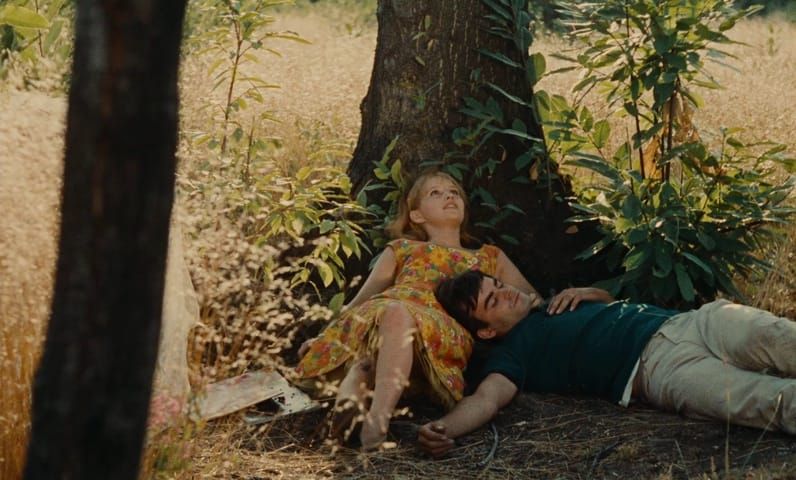
Film: Le Bonheur (1965)
Genre: Romance/Horror
Watched on: HBO Max
To fully dive into this film, there will be spoilers ahead!
Le Bonheur is my first Agnès Varda film, an auteur who is often regarded as the "grandmother of the New Wave". Her short documentary on the Black Panthers left a lasting impact on me, specifically the part where Kathleen Cleaver speaks on the natural hair movement and the importance of women in positions of authority within the movement. I'm glad this film challenge finally pushed me to sit down and watch Le Bonheur.
The French title translates to Happiness, though it's anything but happy.
We are introduced to François and Therese, a young couple living in suburban Paris with their two young kids. They go on picnics and take naps in the field. The cinematography will quickly lead you to believe that their life is idyllic and peaceful. It's serene and beautiful.
One day, François goes to the post office and is taken by Emilie. The attraction is mutual, which quickly leads to an affair between the two.
Therese is a seamstress who works at home, caring for her children, doing the housework, and designing wedding dresses. And we have François, having coffee with his mistress in broad daylight and going home with her afterwards for sex. Despite his apparent satisfaction in his marriage to Therese, he continues seeing Emilie without remorse. This man is able to return home to his wife and sleep peacefully in the ridiculously small bed that they share together.
Eventually, Therese finds out about the affair. During a family picnic, they eat and play with the kids in a lush field. Once tired, they set their kids up under a makeshift tent for their afternoon nap. The couple makes love in the field and falls asleep. Nothing is amiss.
When François wakes up, he realizes that Therese is gone.
He shouts her name, but there is no response, so he gathers their stuff and the kids in search of her. We see him frantically asking passersby if they have seen his wife, but no one has. As panic sets in, he hears a commotion by the lake nearby. Collectively, our hearts sink as what many of us probably suspect seems to come true. François cries over his dead wife, who took her life over his infidelity.
Once the credit rolled, all I could think about was how men really aren't shit.
Agnès Varda titled this film perfectly as a reflection of one's pursuit of "happiness" and its consequences. In his quest to achieve his perceived version of happiness, François's actions brought tragic consequences to his family. And yet this monster of a man still gets what he wants! I know, just when you think it couldn't get any worse, trust me, it does.
After an extended vacation following Therese's funeral, François rekindles his relationship with Emilie and MARRIES her.
Emilie takes on what Therese did, doing the housework and caring for the children. Soon enough, they continue their family picnics as if nothing ever happened.
The genre split of romance/horror perfectly sums up this film.
In a patriarchal world, this devious man achieves happiness and romance despite his ill actions, whereas Therese's life descends into horror when she realizes her husband has taken on a mistress. Author and Film Studies lecturer, Jenny Chamarette, sums it up well, "like nothing else: a horror movie wrapped up in sunflowers, an excoriating feminist diatribe strummed to the tune of a love ballad. It’s one of the most terrifying films I’ve ever seen."
In my anger post-film, I rated Le Bonheur 3 stars, but upon further reflection, it deserves 4.
Although it incited severe rage within me, it's one that I'm sure plenty of women have experienced, particularly at the hands of men. Perhaps this film mirrored the anger too close to home, but it tapped into a universal truth that I simply cannot deny.