Summer of Inspiration: Artist Date Week 8
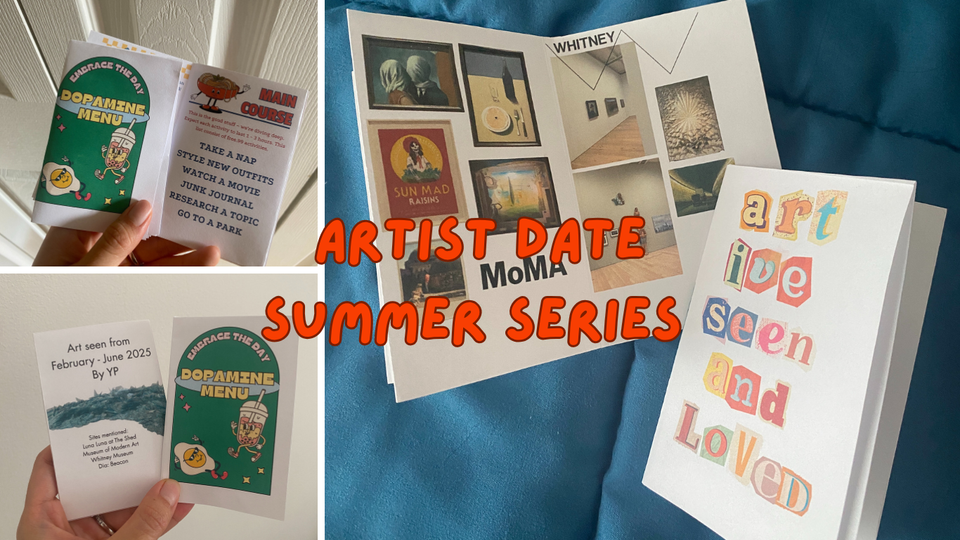
I've always loved zines for their DIY aesthetic. Zines that are low-cost in production yet hold so much value in their design, contents, and ideas are my weakness. For the past few KL Art Book Fairs, there were too many zines that were high-quality in terms of production, but no longer fell into the category of zines due to their staggering price tags.
Merriam-Webster defines zine as "a noncommercial, often homemade or online publication usually devoted to specialized and often unconventional subject matter".
The keyword here is noncommercial.
Zines are meant to be scrappy, imperfect, and accessible. Otherwise, it's a magazine, which is commercial and for-profit.
There has been a history of zines used as tools for disseminating knowledge, highlighting marginalized voices, organizing movements, and fostering a sense of collective power for transformative change. The riot grrrl movement used zines to address feminist issues, such as body image, racism, mental illness, discrimination, etc. The riot grrrl zines were homemade, Xeroxed, collaged, and distributed.
Due to its low barrier to entry and DIY nature, zines allowed marginalized communities who were often excluded from mainstream publications to practice agency, as the medium allowed them to bypass traditional gatekeepers of information.
Much like screen printing, once you have the template, it's easy to mass print.
My journey into making zines started from this video by brattyxbre. Her channel covers so many facets of zine-making, from using digital or analog tools to sharing common zine mistakes.
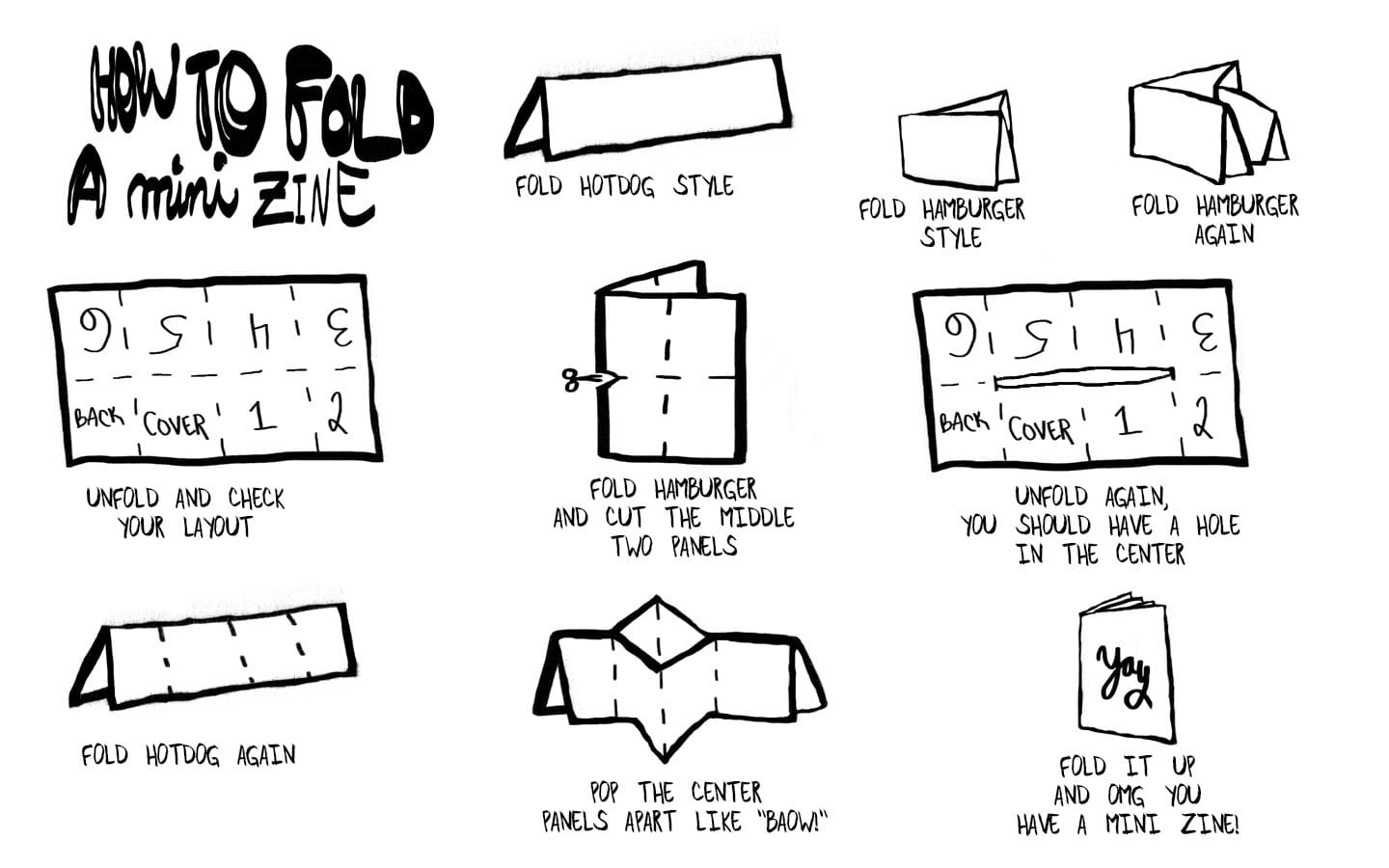
This led to me joining a zine-making workshop where I learned to fold a one-page zine (reference guide above) as well as some binding methods that I have yet to explore on my own. During the workshop, we were asked to create the cover page of a zine that features a prompt, then pass it on to the person beside us. It was a fun collaborative exercise that allowed me to stretch my creative muscles.
I would love to organize a zine hangout in the future where we replicate the experience, because it builds a sense of collaboration and spontaneity that reminds me of my youth. Bonus points if everyone brought magazines, printed material, and/or stickers to make the experience fully analog. There's something about cutting an image and pasting it into the zine that makes me feel so accomplished, probably because it's so tangible in our predominantly online lives.
The best thing about zine-making is that you don't need too many materials, especially if you're using Canva or Procreate to design. It's also not too time-consuming. The one-page zines I created during this time were all made under 2 hours, including designing everything from scratch to printing them out within the ideal border size.
All you need is an idea, which will then get the ball rolling.
The beauty of zines is that the content has no limitations. You can make a zine of your favorite memories, recipes you want to try, TV shows that made you cry, or niche interests that keep you up at night. It's whatever you want it to be.
Once the zine is printed, the best part is folding it, cutting, and assembling it. Seeing it come to life in my hands is a profoundly rewarding experience.
I have immensely enjoyed the zine-making process because it allows me to create something tangible without the pressure of buying additional supplies. Most creative hobbies require a supply run of sorts, such as painting, baking, knitting, sewing, and crocheting. The list goes on! Zine-making is low-effort, which enables me to fully focus on the creative process. You can find most supplies needed to make a zine at home. All you need to get started is paper, a pair of scissors, and glue if you're going the analog route, or a printer for those who prefer designing digitally.
If you've started making zines and would like to do a zine swap, feel free to message me!